
Compare the best eSIM plans for Japan
Internet from the moment you land in Japan
By SamuelData collected on Page verified on Methodology
- Instant activation
- iPhone and Android compatible
- From €0.30 for 1 GB or more
- 6,200+ plans compared
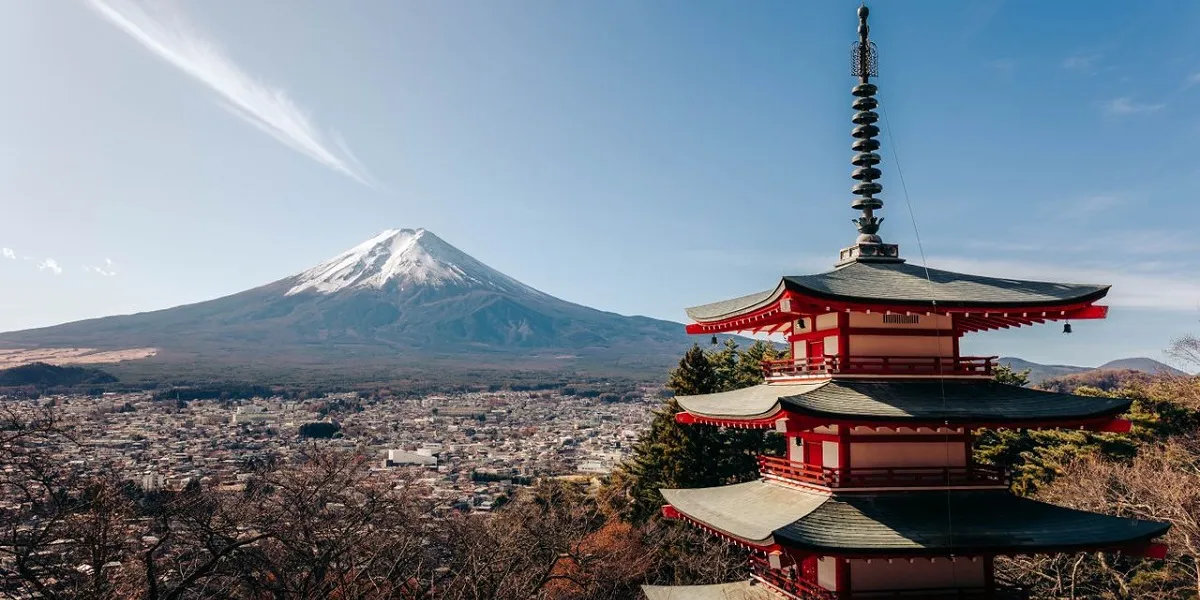
Photo credit : Lorenzo Castellino
€0.30
Cheapest plan, 1 GB or more
6,200+
Japan plans compared
121+
Providers available
5G
Network supported
Entry price measured on fixed-volume plans of 1 GB or more covering the country. Volumes below 1 GB and plans billed per day, whose price is not comparable, fall outside the calculation.
Best eSIM deals for Japan

AbesteSIM
1 GB · 1 day
1 GB
1 day
JP
€0.30

Stellar eSIM
1 GB · 7 days
1 GB
7 days
JP
€0.43

eSIM.dog
1 GB · 1 day
1 GB
1 day
JP
€0.63

eSIM4Travel
1 GB · 7 days
1 GB
7 days
JP
€0.68

Strongesim
1 GB · 7 days
1 GB
7 days
JP
€0.74

BambooSIM
1 GB · 3 days
1 GB
3 days
JP
€0.85
eSIM for Japan at a glance
From
€2.33
For 5 GB / 30 days
Plan duration
1 to 30+ days
Depending on the plan
Local networks
NTT Docomo, SoftBank, KDDI au
4G / 5G
VPN needed?
No
All Western services work normally
Hotspot tethering
Available
On most plans
Compatibility
iPhone XS+ / Android 8.0+
Check your device
Internet in Japan: everything you need to know
Japan shows an internet penetration rate of around 83% and one of the most reliable mobile ecosystems in the world (source: ITU DataHub, 2024). 4G LTE covers virtually all populated areas including rural zones and Shinkansen lines, and 5G is rolling out fast in major cities. A Japan eSIM gets you onto this network the moment you land at Narita, Haneda or Kansai, with no card swap and no reliance on hotel wifi.
- ●4G/5G coverage in every major city and tourist destination (Tokyo, Osaka, Kyoto, Hokkaido, Okinawa).
- ●What matters in Japan is not peak throughput but how consistent the network is : it almost never drops, metro tunnels and Shinkansen lines included.
- ●Perfect for transport apps (Google Maps, Hyperdia, JR Pass) and translation (DeepL, Google Translate).
- ●Shinkansen and urban metros fully covered, tunnels included.
Sources: Internet Society Pulse : Japan, ITU DataHub : Japan statistics
Networks and connectivity on the ground
- Average speed
- 66.5 Mbps downloadmeasured 2026 · Internet Society Pulse
- Coverage
- Nationwidemeasured 2025 · Internet Society Pulse
- 5G
- Widely availablemeasured 2025 · Internet Society Pulse
- Local operators
- NTT Docomo · au (KDDI) · SoftBank · Rakuten Mobilemeasured 2026 · Datadopt research
- Public Wi-Fi
- Widely availablemeasured 2026 · Datadopt research
Practical information
- Currency
- Japanese Yen (JPY)
- Payments
- Card and cashATMs everywhere
- Tipping
- Tipping is not expected
- Power socket
- Type A, Type B100 V, 50/60 Hz
- Official languages
- JapaneseLimited English
- Dialling code
- +81Time zone : Asia/Tokyo
- Emergency numbers
- 110 · 119 · 119
When to go
- Best time to go
- March, April, October, November
- Shoulder season
- May, June
- Peak season
- April, August
- Seasonal hazards
- TyphoonsAugust, September, October
- Extreme heatJuly, August
Japan has two reliable windows and two to avoid. Late March into April for cherry blossom, October into November for maples: mild air, stable skies, long light. June brings the rainy front, July and August bring humid heat and late-summer typhoons, and the middle of August is when the entire country travels at once.
The rainy season is real
Early summer brings weeks of grey, close, drizzling weather that most itineraries ignore because it does not look dramatic on a forecast. Nothing closes, but hikes turn to mud, long views vanish and laundry never dries, so an indoor-heavy plan for those weeks is worth building in advance.
Three weeks the calendar blocks
Golden Week in spring, Obon in August and the New Year period shut many small businesses, fill trains and push hotel rates to their annual peak. These are the only stretches when travelling without reservations becomes genuinely hard, and that holds well outside the big cities too.
The rail pass is not a universal ticket
A nationwide pass covers one operator's network, which excludes the fastest services on some corridors as well as the private railways and subways that actually reach most neighbourhoods. Working out which legs it covers before buying is the difference between a bargain and an expensive souvenir.
Public wifi rarely works on arrival
Stations, convenience stores and cafés all advertise free wifi, and most of it wants an email registration, a confirmation link or an app before it lets anything through. That is precisely the chain you cannot complete before you have a connection, which is why arriving already connected matters here more than in most countries.
Iconic sites and coverage
Mount Fuji
Fuji is an active volcano, the country's highest point and a cultural object more than a viewpoint: most visitors look at it from the Five Lakes or from a train window rather than climbing it. The ascent opens only in summer, is now regulated and charged for, and the high trails are closed the rest of the year.
Fushimi Inari Taisha
Thousands of vermilion gates donated by businesses climb the side of Mount Inari on a circuit that takes several hours. The shrine is free and never closes, and the crowd thins out within the first few hundred metres, which is where almost every photograph of it is taken.
Kinkaku-ji
The golden pavilion, rebuilt after an arson fire in the mid-twentieth century, is seen from a one-way path around its pond; nobody goes inside the building. It is a short visit, and it pairs naturally with Ryoan-ji and its dry garden a few minutes away.
Itsukushima Shrine
Built on stilts in the bay at Miyajima, this shrine is a different place depending on the tide: its floating gate stands in open water at high tide and can be walked up to at low tide. Checking the tide table before taking the ferry beats arriving at a random hour.
Shibuya Crossing
Shibuya's diagonal crossing clears several hundred people off its pavements on every light cycle, and functions as a shortcut far more than as a spectacle. The view that makes sense is from above, through the windows of the shopping floors around it, if you are willing to buy a drink for the seat.
Nara Park
The park ties together Todai-ji, Kasuga-taisha and around a thousand sika deer, treated as divine messengers and legally protected as such. They are not tame: they shove, bite bags and follow anyone holding a cracker, and the signs say so in plain language.
Kumano Kodo
A network of pilgrimage routes across the Kii peninsula, walked over several days between shrines and village inns through dense, wet forest. Beds are scarce and book out months ahead, and the support buses are infrequent enough that a missed one reshapes the day.
Dotonbori
The Dotonbori canal concentrates what Osaka does differently from Tokyo: giant mechanical signs, takoyaki counters and a crowd that does not thin out until late. It is the street that explains fastest why the city defines itself by its food.
Entry and health
- Visa
- Visa-freemeasured 2025 · Destination country's consular authorityPermitted length of stay : 90 days
Sources Internet Society Pulse, Datadopt research, Destination country's consular authority
Datadopt Observatory
Price per GB in Japan: what our data shows
According to the Datadopt Observatory, the lowest price per GB recorded in Japan comes down to 0.06 €/GB, across a sample of 2,742 fixed-volume offers retained for the measurement. That floor is reached on large data bundles : a 5 GB plan over 30 days costs noticeably more per GB. The real differentiator is still the depth of the offer : the more plans compete, the easier it is to find the duration and data volume that fit your trip.
Lowest price per GB recorded
0.06 €/GB
Offers in the price sample
2,742
Asia average
0.21 €/GB
World ranking
6 / 215
Japan is 71% cheaper than the Asia regional average (0.21 €/GB).
Source: Datadopt eSIM Price Observatory, 170,286 plans analysed, measured 1 September 2026.
See the eSIM price Observatory by country →Which eSIM providers for Japan?
Here are the 6 best-placed eSIM providers for Japan, ranked by best price per GB. Prices are expressed per GB so plans of different sizes can be compared on the same basis.
| Provider | Price per GB | From | Max duration | Hotspot | 5G |
|---|---|---|---|---|---|
| eSIM.dog | 0.25 €/GB | 0.63 € | 30 d | Yes | No |
 EscapeSIM | 0.28 €/GB | 1.41 € | 1 d | Yes | Yes |
| AbesteSIM | 0.30 €/GB | 0.30 € | 30 d | Yes | No |
| Stellar eSIM | 0.41 €/GB | 0.43 € | 30 d | Yes | Yes |
 MicroEsim | 0.45 €/GB | 0.90 € | 5 d | Yes | No |
| Strongesim | 0.60 €/GB | 0.74 € | 30 d | Yes | Yes |
Providers ranked by best price per GB, across plans of at least 1 GB. Source: Datadopt catalogue.
Compare all plans →Device compatibility
eSIM is built into every iPhone XS and later, as well as Samsung Galaxy S20+, Google Pixel 3a+ and most high-end Motorola, Oppo, Sony and Xiaomi models.
Not sure about your device? Check compatibility here.
How to install your eSIM for Japan
- 1. Compare offers on https://www.datadopt.com/en/compare/jp
- 2. Browse our partners' eSIM offers and choose the data volume and duration that fit your trip.
- 3. Purchase the eSIM plan that best fits your needs on our partner's site.
- 4. Receive a QR code by email after purchase.
- 5. Before you leave or during your stay, add the eSIM to your smartphone (Note: a stable Wi-Fi connection may be required during this step.)
- 5.1. On iPhone: Settings > Mobile Data > Add Plan > Scan the QR code
- 5.2. On Android: Settings > Connections > SIM card manager > Add a mobile plan
- 6. Once you arrive, turn on the data of your eSIM and enjoy reliable internet in Japan.
First eSIM? The full walkthrough, with iOS and Android screenshots, lives in our guide how to install an eSIM on your smartphone.
Frequently asked questions
Do eSIMs really work in Japan?
Yes. The vast majority of international eSIMs connect to NTT Docomo or SoftBank the moment you land. Japan offers one of the best mobile experiences in the world, including on the Shinkansen and in the metro.
Do I need a VPN in Japan?
No, no Western service is restricted in Japan: Google, WhatsApp, Instagram, X, YouTube all work normally.
Can I keep my home phone number?
Yes. The Japan eSIM installs alongside your main line. You keep your home number for SMS and calls while using the eSIM for mobile data in Japan.
What's the best eSIM for Tokyo or Osaka?
Both cities have full 5G coverage. For a short trip (≤ 7 days) a 3 to 5 GB plan is enough. For 2 to 3 weeks with a busy itinerary (maps, translation, photos), target 10 to 20 GB.
Do IC payments (Suica, Pasmo) need a Japanese SIM?
No. Suica/Pasmo cards and their mobile versions (Apple Wallet) work independently of the cellular network in use. They rely on NFC and a rechargeable balance.
Can I share my connection with other devices?
Most Japan eSIM plans allow hotspot tethering. The detail appears on each plan page on Datadopt.
How much does an eSIM cost in Japan, and is it cheap?
According to the Datadopt Observatory, the lowest price per GB recorded in Japan comes down to 0.06 €/GB, across a sample of 2,742 fixed-volume offers retained for the measurement. That floor is reached on large data bundles : a 5 GB plan over 30 days costs noticeably more per GB. The real differentiator is still the depth of the offer : the more plans compete, the easier it is to find the duration and data volume that fit your trip. Japan is 71% cheaper than the Asia regional average (0.21 €/GB). In our global ranking of well-covered eSIM markets, Japan sits at position 6 of 215 by price per GB (1 = cheapest). Source: Datadopt eSIM Price Observatory, 170,286 plans analysed, measured 1 September 2026.
See the eSIM price Observatory by country →Explore other popular destinations
Ready to stay connected in Japan?
Compare the best eSIM offers and enjoy data the moment you arrive, at the best price.