
Compare the best eSIM plans for Croatia
Internet from the moment you land in Croatia
By SamuelData collected on Page verified on Methodology
- Instant activation
- iPhone and Android compatible
- From €0.30 for 1 GB or more
- 6,300+ plans compared
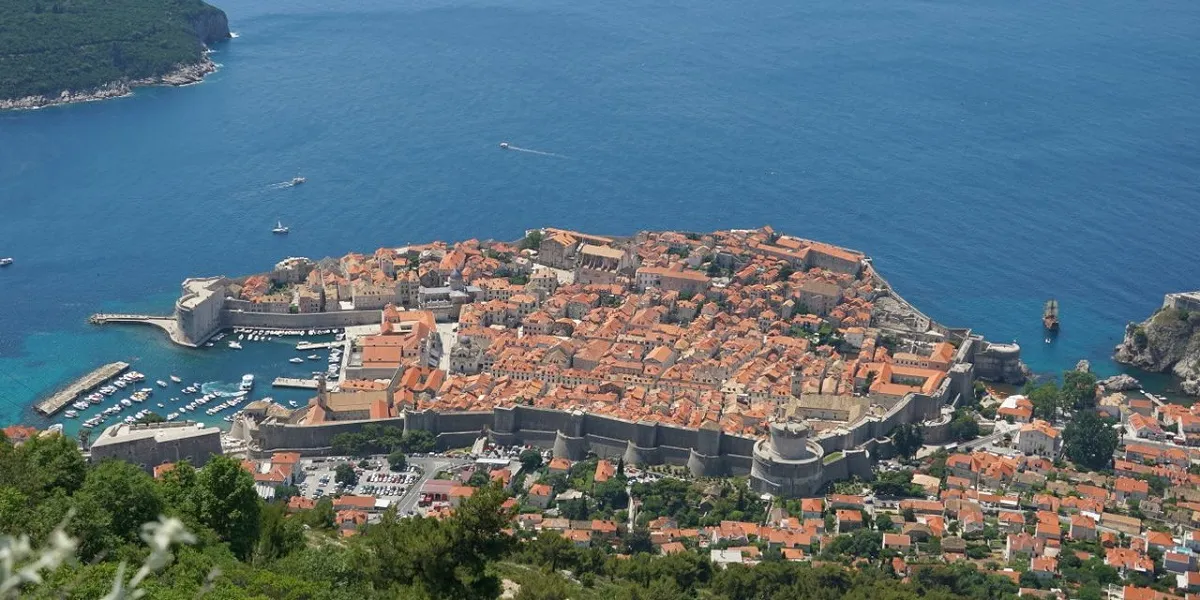
Photo credit : René Lussi
€0.30
Cheapest plan, 1 GB or more
6,300+
Croatia plans compared
115+
Providers available
5G
Network supported
Entry price measured on fixed-volume plans of 1 GB or more covering the country. Volumes below 1 GB and plans billed per day, whose price is not comparable, fall outside the calculation.
Best eSIM deals for Croatia

AbesteSIM
1 GB · 1 day
1 GB
1 day
HR
€0.30

Strongesim
1 GB · 1 day
1 GB
1 day
HR
€0.57

Stellar eSIM
1 GB · 7 days
1 GB
7 days
HR
€0.59

eSIM.dog
1 GB · 5 days
1 GB
5 days
HR
€0.69

MicroEsim
1 GB · 1 day
1 GB
1 day
HR
€0.84

Textr eSIM
1 GB · 7 days
1 GB
7 days
HR
€0.86
eSIM for Croatia at a glance
From
€1.08
For 5 GB / 30 days
Plan duration
1 to 30+ days
Depending on the plan
Local networks
A1 Hrvatska, Hrvatski Telekom (T-HT), Telemach
4G / 5G in major cities
VPN needed?
No
All Western services work normally
Hotspot tethering
Available
On most plans
Compatibility
iPhone XS+ / Android 8.0+
Check your device
Internet in Croatia: everything you need to know
Croatia shows an internet penetration of around 84% and a solid mobile footprint along the Dalmatian coast and inland (source: ITU DataHub, 2024). An EU member since 2013 and in the Schengen Area since 2023, Croatia fully benefits from EU roaming at domestic rates. 4G LTE covers the entire coastline and 5G is rolling out in Zagreb, Split and Dubrovnik. A Croatia eSIM stays relevant for non-EU travelers.
- ●4G/5G coverage across every major city (Zagreb, Split, Rijeka, Dubrovnik, Zadar) and most Dalmatian islands (Hvar, Brač, Korčula, Vis).
- ●Average mobile download speeds around 60 to 80 Mbps per Ookla (Q1 2025).
- ●For EU/EEA travelers, roaming is charged at the domestic rate (RLAH); a dedicated eSIM stays useful for non-EU travelers (UK, Switzerland, US).
- ●Perfect for Bolt, Uber, Google Maps, Jadrolinija (Adriatic ferries) and booking apps.
Sources: Internet Society Pulse : Croatia, ITU DataHub : Croatia statistics, Ookla Speedtest Global Index
Networks and connectivity on the ground
- Average speed
- 120.2 Mbps downloadmeasured 2026 · Internet Society Pulse
- 5G
- Widely availablemeasured 2025 · Internet Society Pulse
- Local operators
- Hrvatski Telekom · A1 Hrvatska · Telemachmeasured 2026 · Datadopt research
- Public Wi-Fi
- Widely availablemeasured 2026 · Datadopt research
Practical information
- Currency
- Euro (EUR)
- Payments
- Card and cashATMs everywhere
- Tipping
- Round up the bill
- Power socket
- Type C, Type F230 V, 50 Hz
- Official languages
- CroatianAlso spoken : Italian, GermanEnglish widely spoken
- Dialling code
- +385Time zone : Europe/Zagreb
- Emergency numbers
- 112
When to go
- Best time to go
- May, June, September
- Shoulder season
- April, October
- Peak season
- July, August
- Seasonal hazards
- Extreme heatJuly, August
- WildfiresJuly, August
May, June and September are the right months: the sea is warm enough, the Dubrovnik walls are walkable without suffering, and the ferries are already on full timetables. July and August stack heat, peak pricing and cruise arrivals. Winter empties the coast to the point where many islands have nothing open.
Ferries set the itinerary, not the map
Island-to-island links often route through Split or Hvar rather than running direct, and off-season sailings thin out sharply. Three islands in four days usually turns into two trips back to the mainland.
The national parks are capped
Plitvice and Krka sell timed entry online and genuinely turn people away in August. Treat them as booked events in the middle of a loose coastal trip, not as somewhere you drive to on a whim.
Summer carries a fire risk
Wildfire is part of the coastal and island season, and inland trails can close without notice. Local rules on open flame and barbecues are enforced, and worth following even where nobody is watching.
Istria is not Dalmatia
The north of the coast reads Italian, in the language, the food and the Venetian street plans; the south is Dalmatian and more Mediterranean-Balkan. They are a full day apart and make two different holidays.
Iconic sites and coverage
Dubrovnik City Walls
Two kilometres of continuous rampart above the rooftops and the sea, walked one way round. Opening time and the last hour are the only tolerable slots in summer, because there is no shade anywhere on the circuit.
Diocletian Palace
In Split, a Roman emperor's palace is not an archaeological site but the town centre itself, with flats, bars and a market inside the walls. The vaulted substructures are the only place the original plan reads clearly.
Plitvice Lakes
Sixteen terraced lakes joined by waterfalls, crossed on one-way boardwalks. Entry is timed and booked online; arriving in August without a ticket regularly means being turned back at the gate.
Krka Waterfalls
Easier to reach from the coast than Plitvice, with a river stepping down over broad travertine shelves. Swimming at the main falls is no longer permitted, which is worth knowing before planning the day around it.
Hvar Town
A Venetian town with a fortress above the harbour and lavender fields inland. It is also the departure point for the Pakleni islands, which are a morning boat rather than an afternoon decision.
Kornati Archipelago
Eighty bare limestone islands with no villages and no roads, visited on day boats from Murter or Zadar. Coverage is intermittent and there is no fresh water, so everything is decided before you board.
Pula Arena
One of the best-preserved Roman amphitheatres anywhere, still used for concerts and a summer film festival. The Istrian country around it is more Italian than Dalmatian in both language and kitchen.
Paklenica Gorges
Two canyons cut into the Velebit range, holding most of Croatia's climbing and trails that gain height fast on bare rock. Signal goes at the gorge mouth and the heat sits trapped inside by midday.
Sources Internet Society Pulse, Datadopt research
Datadopt Observatory
Price per GB in Croatia: what our data shows
According to the Datadopt Observatory, the lowest price per GB recorded in Croatia comes down to 0.07 €/GB, across a sample of 2,886 fixed-volume offers retained for the measurement. That floor is reached on large data bundles : a 5 GB plan over 30 days costs noticeably more per GB. The real differentiator is still the depth of the offer : the more plans compete, the easier it is to find the duration and data volume that fit your trip.
Lowest price per GB recorded
0.07 €/GB
Offers in the price sample
2,886
Europe average
0.12 €/GB
World ranking
12 / 215
Croatia is 42% cheaper than the Europe regional average (0.12 €/GB).
Source: Datadopt eSIM Price Observatory, 170,286 plans analysed, measured 1 September 2026.
See the eSIM price Observatory by country →Which eSIM providers for Croatia?
Here are the 6 best-placed eSIM providers for Croatia, ranked by best price per GB. Prices are expressed per GB so plans of different sizes can be compared on the same basis.
| Provider | Price per GB | From | Max duration | Hotspot | 5G |
|---|---|---|---|---|---|
| Stellar eSIM | 0.27 €/GB | 0.59 € | 30 d | Yes | Yes |
| AbesteSIM | 0.30 €/GB | 0.30 € | 7 d | Yes | No |
| eSIM.dog | 0.47 €/GB | 0.69 € | 30 d | Yes | No |
| 0.52 €/GB | 1.24 € | 7 d | Yes | No | |
| Strongesim | 0.53 €/GB | 0.57 € | 30 d | Yes | Yes |
| MicroEsim | 0.69 €/GB | 0.84 € | 7 d | Yes | Yes |
Providers ranked by best price per GB, across plans of at least 1 GB. Source: Datadopt catalogue.
Compare all plans →Device compatibility
eSIM is built into every iPhone XS and later, as well as Samsung Galaxy S20+, Google Pixel 3a+ and most high-end Motorola, Oppo, Sony and Xiaomi models.
Not sure about your device? Check compatibility here.
How to install your eSIM for Croatia
- 1. Compare offers on https://www.datadopt.com/en/compare/hr
- 2. Browse our partners' eSIM offers and choose the data volume and duration that fit your trip.
- 3. Purchase the eSIM plan that best fits your needs on our partner's site.
- 4. Receive a QR code by email after purchase.
- 5. Before you leave or during your stay, add the eSIM to your smartphone (Note: a stable Wi-Fi connection may be required during this step.)
- 5.1. On iPhone: Settings > Mobile Data > Add Plan > Scan the QR code
- 5.2. On Android: Settings > Connections > SIM card manager > Add a mobile plan
- 6. Once you arrive, turn on the data of your eSIM and enjoy reliable internet in Croatia.
First eSIM? The full walkthrough, with iOS and Android screenshots, lives in our guide how to install an eSIM on your smartphone.
Frequently asked questions
Do eSIMs really work in Croatia?
Yes. The vast majority of international eSIMs connect to A1 Hrvatska or Hrvatski Telekom the moment you land at Zagreb, Split or Dubrovnik. Excellent coverage along the coast and main islands.
Do I need a VPN in Croatia?
No. All Western services work normally.
Can I use my EU plan in Croatia?
Yes, EU roaming is included at domestic rates for EU subscribers. Croatia has been an EU member since 2013. A dedicated eSIM stays useful for non-EU travelers.
What's the best eSIM for Dubrovnik or Split?
Both cities have solid 4G/5G coverage. For a short trip (≤ 7 days) a 3 to 5 GB plan is enough. For 2 weeks with heavy use (maps, ferries, photos), target 10 GB.
Do eSIMs work on Dalmatian ferries?
On short coastal hops (Split-Hvar, Split-Brač) coverage holds. On long ferries (Rijeka-Dubrovnik) the connection can drop on open sea.
Can I share my connection with other devices?
Most Croatia eSIM plans allow hotspot tethering. The detail appears on each plan page on Datadopt.
How much does an eSIM cost in Croatia, and is it cheap?
According to the Datadopt Observatory, the lowest price per GB recorded in Croatia comes down to 0.07 €/GB, across a sample of 2,886 fixed-volume offers retained for the measurement. That floor is reached on large data bundles : a 5 GB plan over 30 days costs noticeably more per GB. The real differentiator is still the depth of the offer : the more plans compete, the easier it is to find the duration and data volume that fit your trip. Croatia is 42% cheaper than the Europe regional average (0.12 €/GB). In our global ranking of well-covered eSIM markets, Croatia sits at position 12 of 215 by price per GB (1 = cheapest). Source: Datadopt eSIM Price Observatory, 170,286 plans analysed, measured 1 September 2026.
See the eSIM price Observatory by country →Explore other popular destinations
Ready to stay connected in Croatia?
Compare the best eSIM offers and enjoy data the moment you arrive, at the best price.